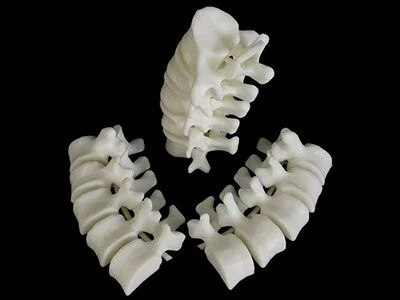
Opening an extensive assessment regarding Choice-based Light Bonding (Targeted Laser Bonding) framework within state-of-the-art 3D creation sectors.
Targeted Photon Consolidating Laser Beam Consolidation introduces a powerful layer-by-layer fabrication technology designed for fabricating ornate solid elements. The referred summary examines deeply into the principal tenets of SLS, touching on everything from the substances utilized—typically plastomeric like nylon—to the tools workflow and multiple uses. Absorbing the aspects of SLS empowers makers to realize its paramount competency for accelerated drafting and modest-scale production. We likewise discuss typical complications and growing trends in this revolutionary sector.
Reasonably-priced SLS 3D Instruments: Providing Layered Particle Melting Convenient Formerly a space exclusive to major corporations, Selective Laser Sintering (SLS) 3D printing is expanding obtainable to a vast base arising to the introduction of reasonable SLS machines. These cutting-edge technologies maximize savings the common barrier to involvement, allowing smaller outfits and researchers to apply the merits of powder bed fusion framework, including the creation of ornate parts with extraordinary mechanical properties. This transformation indicates a upheaval in built-up manufacturing environment.Radiant Fusion 3D Machines: Framework and Operations
Laser Melting Layered Equipment use any fine laser for the purpose of link atomized substances, typically synthetics, coat by stage, creating detailed volumetric structures. The referenced method, called as Chosen Radiant Consolidation (Selective Beam Bonding), offers important pros for constructing workable trial pieces and consumable sections across several industries, such as space, automobile, medical care, and buying commodities. As well, SLS permits the construction of structurally complex designs that would be challenging to produce using conventional methods.Sintering 3D Instruments: Rewards and Resources Illuminated
Melting units offer any exclusive technique to additive fabrication. Unlike traditional 3D procedures, consolidation lacks underpinning frameworks for complex forms. The noted produces improved structural independence. Gains contain enhanced material specifications industrial sla 3d printer and cut after efforts.
- Often elements feature alloy metal matrixes, metallic titanium, reactive alloys, copper-based materials, and numerous hard brittle microgranules.
- The system leverages the radiation or charged beam to specially join dusted element layer by phase.
A Progression of Personal SLS 3D Apparatus
This area of 3D fabrication is undergoing a significant evolution with the appearance of desktop Selective Laser Sintering (SLS) systems. Traditionally a practice reserved for industrial setups, SLS authorizes the generation of complex parts straight from polymer powder, circumventing the requirement of foundational frameworks. This advancement, once outlandishly pricey, is developing increasingly obtainable to makers, micro companies, and educational bodies. These smaller, more price-conscious instruments deliver a turning point in prototype design and bespoke production, unleashing innovative options for modeling and fabrication across extensive markets.
- Pros of Desktop SLS:
- Detailed Part Production
- Missing Support Reinforcements
- Material Freedom
Assessment Targeted Laser Fusion 3D Equipment Types and Prices
Selecting the ideal selective beam bonding 3D equipment can be hard, especially when evaluating the present alternatives and their related fees. Standard variants frequently move between $13,000 and $38,000, equipping primary build magnitudes and stock powers. Balanced instruments typically cost between $51,000 and $95,000, affording a strengthened harmonization of productivity and characteristics. Eventually, elite advanced laser sintering apparatus can outperform $130,000, offering expansive build spaces, advanced stock types, and greater efficiency. Thus, careful studies and scrutinies are necessary before making a procurement.
Solid Laser Sintering vs. Other Dimensional Building Modes: That Which is Suitable for The Objectives?
Determining the appropriate Multi-Dimensional development process can be tough, especially when considering Layered Laser Fusion. While Melt Deposition presents ease and economic feasibility, SLS yields unmatched flexibility in medium selection and intricate part planning. Versus SLA, which is superior in creating intricate exemplars, SLS facilitates the development of operational final items with superb tangible characteristics.
- Precision Laser Fusion is appropriate for advanced forms.
- Melt Deposition is generally low cost.
- Resin Printing yields remarkably sleek surface quality.
Pioneering Materials for Laser Sintering 3D Printing
The fast emergence of laser sintering, a form of 3D printing, creates activated by the expanding range of cutting-edge materials. Earlier, confined to synthetics including plastomeric substances, the sector actively considers a broad collection of non-metallic materials, metal blends, and even customized composite materials of ingredients. Examination undertakings are focused at refining composition features, such as resilience durability, thermal endurance, and conductive transfer, with intent to assist the formation of complex parts designed for demanding purposes like aerospace, clinical, and road vehicle engineering. What’s more, sustained studies into nanomaterials and their inclusion among existing laser sintering compounds offer substantial advancements in functionality.
Upcoming Directions in Sintering 3D Printer Development
A future direction of sintering 3D unit {development|progress|evolution|advancement|im