Every venerable katana exists as a exquisite work of art, but consider if you desire to communicate your individual character? Refining your armament is a fulfilling journey, allowing you to create a truly uncommon piece. From the grip wrapping and binding to the guard design and heat mark, each aspect offers a chance for unique expression. This analysis delves into the area of katana customizations, providing tips for both newcomers and expert enthusiasts desiring to make their signature on the classical art of the samurai.
Newcomer's Original Mastery
For individuals prepared to embark on the beneficial journey of classical sword techniques , 1060 steel katanas extend an first-rate entry point. This certain grade of essential steel balances a sweet spot between expense and effectiveness . While lacking compared to hard as premium steels, 1060 permits a acceptable level of cutting preparation , making it suited for initiates to learn the core principles of weapon preservation and value the appeal of artisanal Japanese weaponry. It’s a first-rate choice for cultivating experience without the monetary burden of more complex steels.
Ten Ten Steel Cutting Tools : Managing Functionality and Expense
Providing for connoisseurs seeking an authentic cutlass experience without overpowering the cash reserve , T10 substance katanas represent a appealing option. These daggers offer a marked improvement in resilience compared to less expensive alternatives, exhibiting good edge retention and adequate flexibility for basic incising techniques. While not rivaling the top-notch characteristics of superior steels like T100 or folded material , T10 provides a notable blend of performance and affordability , making them a well-liked choice for trainees and those on a small earnings .
Past the Blade : Refining Your Edge's Components and Grip
As the finished sword is undeniably the central point of a katana, truly enriching its elegance lies in the cautious customization of its fittings and grasp . This procedure allows enthusiasts to manifest their one-of-a-kind taste . Weigh the broad possibilities: menuki - decorative decorations that bring visual interest ; the hamon protective covers – often carefully engraved ; the tsuka center itself, wrapped in traditional ito cord ; and the fusa pommel , which can be fabricated from various substances like treasures or antler .
- Adopt concepts that echo with you.
- Test with distinctive elements .
- Concentrate on excellence for a stable statement .
The Appeal of the Katana: Tradition, Creation, and Alloy
Such Japanese sword contains a matchless allure, steeped in epochs of oriental history and ancestry. More than merely a implement of fighting , it's a figure of the bushi ethos – a fusion of dexterity and management . Its evolution spanned multiple generations, with early metallic weapons evolving into the slender curvature and lethal edge we identify today. The manufacture involved is truly remarkable , requiring decades of preparation to perfect . The process involves a detailed folding of smelted iron , creating layers that augment the blade's flexibility and severing ability. Diverse schools of fabricating came about , each with their separate secrets and methods for achieving the perfect stability and acuteness - a truly grueling pursuit.
- Original Katana styles
- The task of the traditional blade in samurai culture
- Traditional forging processes
Deciding the Appropriate Steel for Your Bladed Weapon Project: 1060 vs. T10
Deciding on the suitable steel is remarkably important for any blade project, and the selection between 1060 and T10 can be challenging. 1060 is a common American metal, offering a decent balance of hardness and toughness, making it appropriately easy to condition. However, T10, a Far Eastern steel, habitually boasts heightened wear sustainability and can likely achieve a increased peak hardness, although it can be somewhat difficult to apply and requires detailed heat forging. Consider your competency and targeted results: for a beginner, 1060 may be a prudent platform, while the veteran smith might seek the extra merits of T10.
- User-friendliness of Applying
- Friction
- Ultimate Toughness
Unlocking the Potential: Advanced Katana Customization Techniques
Becoming proficient in blade modification extends far beyond basic grinding. Serious experts are now exploring advanced techniques to truly release a blade's hidden potential. This requires intricate work with the hamon, utilizing specialized products for differential heat treatment and carefully selecting the configuration of the guard to optimize balance and functionality. Beyond purely functional changes, artisans are increasingly focused on achieving unparalleled aesthetic elegance, through complex engraving and layered glazes that truly transform a katana into a showpiece.
Turning Raw Material into Excellence: Creating a 1060 Katana
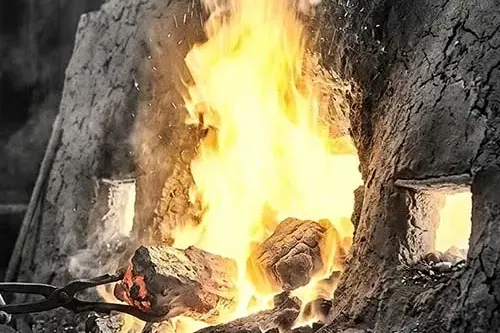
The journey embarks with typical 1060 substance, a resilient material far lacking the beautiful katana it will mature into . Master bladesmiths execute a intricate process of stacking and shaping samurai sword the rough steel, repeatedly heating it and striking it to separate impurities and produce a homogeneous grain structure. This tedious process, often continuing for spans , builds the vital power and adaptability characteristic of a genuine Japanese armament . Follow-up heat processes , including meticulous hardening and resting, are vital to achieve the sought-after equipoise of sharpness, durability and grace .- Combining: Diminishes impurities and creates grain structure.
- Molding: Molds the steel into the initial blade form.
- Hardening: Determines the final hardness and flexibility.
The Everlasting Fascination of the Katana: Broad Investigation of Metalcraft and Adjustment
The classic katana persists a forceful symbol signifying Japanese style , its draw far extending beyond mere martial implements . Forged from unique steel and commonly featuring intricate decorations , the approach of creation itself is a venerated art. Beyond the central craftsmanship, the ability to refine a katana - from the hamon to the tsuka wrapping and collar - enables for a genuinely individual embodiment for both admirers and wielders alike. This fusion of long-established steelwork and boundless personalization results in the katana's continued prominence across the planet .